

We are your number one choice!
Hometown company since 2001
Tom Daniels started CareFree Lawn Service in 2001 and has over 40 years of experience in the industry. We have fully licensed applicators who, over the years, have helped to grow CareFree Lawn into the great company that it is today.
We never lose sight of the fact that taking care of our neighbors is the only sure road to success. With hard work, dedication and providing exceptional service we are sure that you will be satisfied with our service!


Why use our service?
We offer a wide variety of personalized programs for your landscape - specifically designed for our area, our soil and our weather conditions. You can depend on our fast response to your phone calls, questions and lawn problems.
Our highly trained technicians, will pay attention to your lawn, and property. We take pride in providing personal service by experienced, state licensed technicians working with you to achieve results we can both be proud of.
With CareFree you will discover what real quality and value in lawn care can mean for you, your family, and your property.
Our Services
Some services are only available to customers with an active Lawn Care Program in progress with Carefree Lawn Service. Those services are marked with an asterisk * Additionally we do not provide mowing, rolling or clean up services. Please contact your mowing service or landscaper for these types of services.


Lawn Care Program
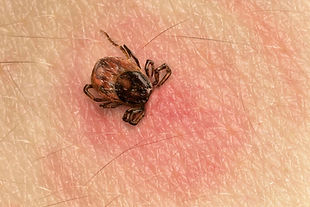
Flea, Tick & Insect
Control Programs*
Grub Control*
With our Lawn Care Program you can receive up to 5 Weed Control & Fertilizer Treatments annually. • Round 1: Early Spring. This is as custom blended granular fertilizer, with Crabgrass Control. • Round 2: Spring. Custom blended granular Fertilizer and Broadleaf Weed Control. • Round 3: Summer. Custom blended granular Fertilizer and Broadleaf Weed Control. • Round 4: Late Summer/Early Fall. Custom blended granular Fertilizer and Broadleaf Weed Control. • Round 5: Fall. Winterizer.
Flea & Tick Program* There are many products over the counter or prescribed by your veterinarian that can be used to control the pest population on your animals. There is also a vaccine for dogs to protect them from Lyme Disease. However, treating your animal is not the only way to eliminate these pests. Their environment needs to be treated as well. While Fleas & Ticks breed all year long, the warmer weather causes a major population boom. It is important to protect your pets as well as yourself from these little pests. This program can have up to 3 visits annually. • F/T 2: Spring • F/T 3: Sumer • F/T 4: Fall Insect Control Program* This program targets surface feeding insects. Chinch Bugs are a common problem in many lawns. They are most active in periods of hot, dry weather. They damage the grass plants by injecting toxins into the plants and extracting plant juices. This damage initially appears as patches of yellowing turf in areas where heat is radiated form sidewalks or driveways. The damage may consist of small, irregular areas where the turf has yellowed or completely disappeared or both. Later, these patches may combine into large areas of completely brown turf. Proper watering and control of thatch will help to minimize damage. Other surface feeding insects that can cause damage to your turf that are prevalent in our area also include: • Sod Webworm • Billbug • Crane Fly Larve All brown spots in lawns should be inspected for turf damaging insects by a Licensed Technician. Call our office for an evaluation.
There are several types of white grubs that feed on the roots of lawn grasses. All of them can cause sever damage if left untreated. Out of sight, Out of mind Grubs live and feed in the soil. It's easy to miss them as they gradually cut the roots out from under your lawn until brown patches begin to appear and the grubs are finally discovered. Pull back the turf if you suspect grubs. If the lawn pulls up easily (like new sod), you may find white grubs in the top inch or so of the soil. Spring and Fall Feeders Grubs are the larval (or worm) state of many types of beetles. The beetles lay their eggs in your lawn, and the newly hatched grub work their way through the thatch and into the soil, where they feed on roots of grass plants. Most beetles lay their eggs mid to late summer, and the young grubs do their greatest damage during the fall months. As the weather cools, most grubs burrow deeper into the soil for the winter. They then return to the surface to feed again as the soil warms in the spring. After this spring feeding, the grubs pupate into adults beetles and being the cycle again. Don't Wait! Grubs don't disappear on their own. They should be treated before damage begins to appear, or as soon as they are discovered. When discovered early enough in the year, a preventive treatment can be applied. When damage appears in the fall, a fast-acting curative treatment is needed.


Lime*
Fall Aeration* / Fall Aeration with Over-Seeding*
Tree & Shrub Program
Lime "sweetens" your soil in areas where soil is naturally "sour" (acidic). Lime is extremely important for growing healthy turf. Lime helps to improve lawn color and density, helps to control thatch, and increases root development. Our lime application helps to keep the chemistry of your soil in balance so that you can have, and enjoy, a thicker, greener, healthier lawn. Lime affects color, thatch and root development When your soil pH is too low (acidic), it needs lime to bring it back into balance. Soil that is acidic causes "fertilizer lock-up". This means that fertilizer and important micro-nutrients become locked up in the soil and are unavailable to the grass points. Lock-up may result in grass becoming thin and yellow, thatch building up faster, and root growth slowing down. A lawn in this condition is called "unthrifty", because even when properly fertilized, it can't make use of the plant food applied to become thick and stay green. We suggest annual liming to acidic soils. It helps everything else we do work even better. That's what makes lime such a great lawn value for you.
Receive a Fall Aeration* or Fall Aeration with Over-Seeding* Fall Aeration* A power core aeration is one of the most important cultural practices available for your lawn. Aeration helps control thatch, improves the soil structure, helps create growth pockets for new roots, and opens the way for water and fertilizer to reach the root zone of your lawn. An annual aeration is advised for all lawns on heavy clay soils, those with a thatch buildup, and any lawn that needs to be "thickened up". How Aeration Works: Aeration removes thousands of small cores of soil 1"-3" in length from your lawn. These cores "melt" back into the lawn after a few rainfalls, mixing with whatever thatch exists on your lawn. The holes created by aeration catch fertilizer and water. Turf roots naturally grow toward these growth pockets and thicken in the process. Aeration holes also relieve pressure from compacted soils, letting oxygen and water move more freely into the root zone. Regular Aeration can help avoid costly lawn renovations! Thatch on your lawn works like a thatched roof. This layer of roots, stems and other plant parts sheds water and prevents fertilizers and insect controls from moving freely into the soil. Thatch that is too heavy can make major lawn renovation necessary. Regular aeration helps thatch break down naturally by mixing the soil cores into the thatch and speeding up decomposition. Performed once per year, aeration significantly reduces thatch and improves turf growth. Fall Aeration with Over-Seeding* Over time, most soil becomes compacted or hard, and your turf has trouble filling in those thing and browning spots. Drought, disease and insects can also take their toll. If any of this sounds familiar, aeration with over-seeding might be just what you need. Some lawns may require Over-Seeding with the Aeration service. This is an additional cost. All lawns, regardless of their condition, can benefit from some level of renovation every year or so. One of the best means of rejuvenating turf is to combine the power of a Professional Aeration with Over-Seeding. Following up aeration with over-seeding is a great way to thicken up a thin lawn or add a hardier, more drought-resistant grass variety to your property. Good seed-to-soil contact is essential for seeding success, and the new grass seed will have an easier time growing in the holes left behind by aeration. Keep in mind that if your lawn has been seeded, the soil should be kept moist with light, frequent sprinklings until the new grass is well established.
An experienced Licensed Technician will inspect your trees and shrubs to give you a comprehensive program designed to help protect your landscape investment by minimizing insect and disease damage. Your trees and shrubs represent a growing investment that's worth protecting. Our program of scheduled inspections and treatments keep all of your ornaments healthy and in top growing condition. With hundreds of insects and diseases that can attack and infest your landscape, our trained licensed technicians can identify and control these problems before severe damage or plant loss occurs. Your tree & shrub program can include up to 5 visits annually. • T1: Early Spring. Dormant Oil for Overwintering Egg Masses • T2: Spring. Insect and Disease Control • T3: Summer. Insect and Disease Control • T4: Late Summer. Insect and Disease Control • T5: Fall. Deep Root Fertilization There are hundreds of insects and diseases that can attack and infest your landscape. Our trained and licensed technicians can identify and control these problems before severe damage or plant loss occurs. Each landscape is different, and we can provide tailored programs to fit your needs. We understand and appreciate the value of your landscape investment.